
Rack System · Houston Area
Cantilever Rack for H-Town Warehouses
Open-front storage for long material, with arms to 72 inches in roll-formed or structural steel, for pipe, lumber, bar and rolled goods.
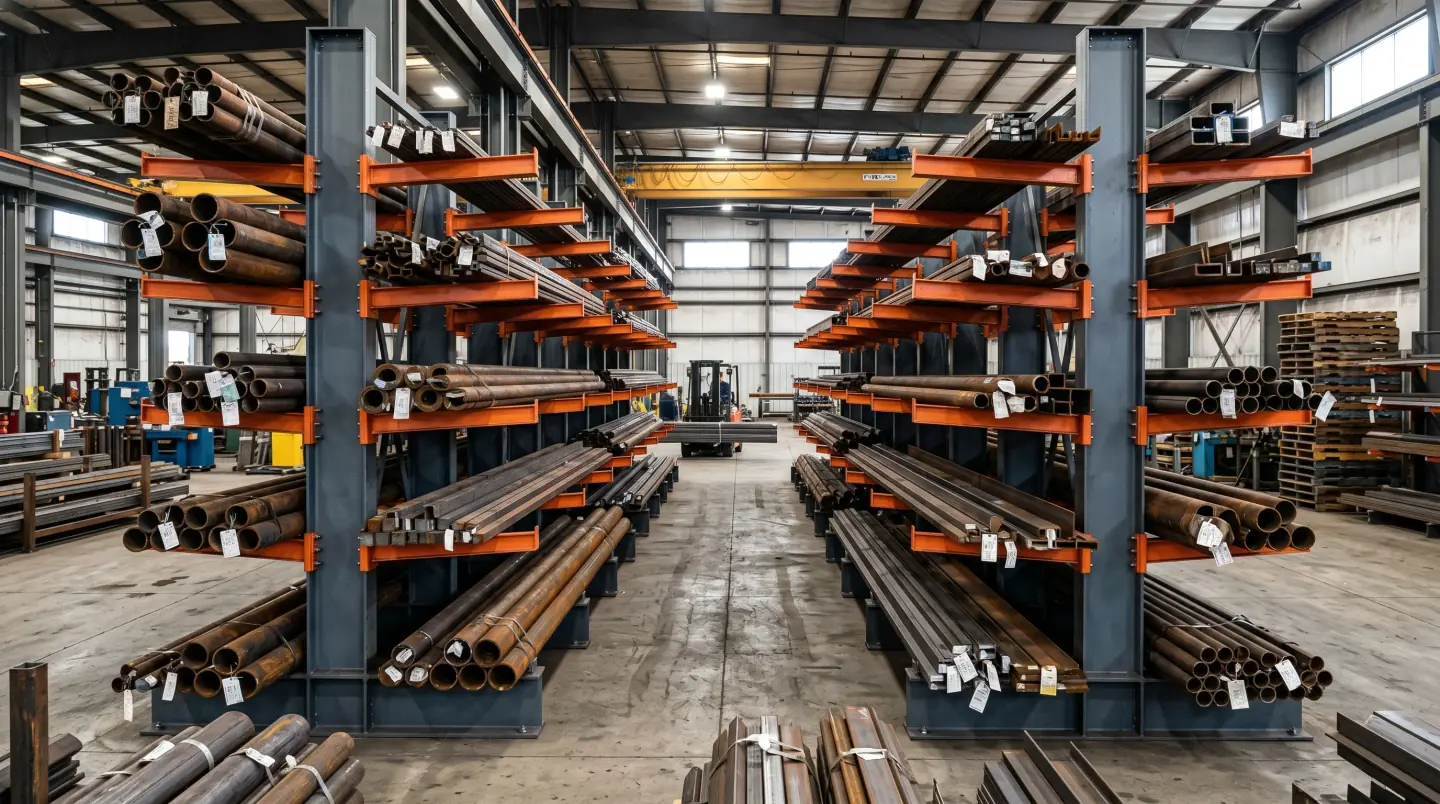
Cantilever Rack delivered and put up from Fort Bend County to Galveston Bay. Asking for a price costs nothing.
The basics
How Cantilever Rack earns its floor space
Some material simply does not fit on a pallet: pipe, tube, lumber, bar stock, rolled goods and long fabrications. Cantilever rack solves that with upright columns and arms that reach out from them, and nothing across the front. Loads of any length rest across as many arms as they need, with no front post in the way. Build it single-sided against a wall or double-sided as a freestanding row served from both aisles. Arm ratings run from roughly 500 lb per pair on light roll-formed designs to 4,000 lb and more on structural steel. Around Houston that covers PVF houses feeding the refineries and chemical plants, lumber yards serving new neighborhoods, steel fabricators, HVAC supply and oversize goods. H-Town Pallet Racking designs and installs cantilever to the adopted local building code and RMI ANSI MH16.1-2023, with base plates and anchors sized for the lateral and wind loads at your site, and hot-dip galvanized finishes where outdoor or salt-air exposure warrants them.
- A proper home for long and odd-shaped material pallet rack cannot hold
- Space back from product that was palletized only to get it off the floor
- Fewer crushed or bent bundles than floor stacking
- Twice the storage per column line with double-sided rows
Built in
Features that matter
- Columns from about 8 to 25 feet for one or several arm levels
- Arms from 24 to 72 inches, with custom lengths available
- Light roll-formed through heavy structural designs
- Wall-backed or freestanding double-sided rows
- End stops, inclined arms, rub strips and dividers
- Hot-dip galvanized options for outdoor and coastal yards
- Base plates and anchors sized for site wind and lateral loads
By the numbers
Cantilever Rack: specs
Typical specs
Columns with arms
Heavy columns, I-beam or tube, are bolted down through base plates. Arms attach at chosen heights and project 24 to 72 inches to carry the load.
Nothing across the front
Without front posts, the load face is open end to end. A 24-foot stick of pipe spans several arms with nothing to dodge.
Loaded from the aisle side
A lift truck with long forks, or a side-loader, runs parallel to the row and sets material across the arms without ever entering the rack.
Good fit or not
Does it suit your building?
It makes sense when
- Material runs longer than about 48 inches: pipe, lumber, bar, extrusions, rolls
- Product cannot go on pallets, or palletizing wastes space
- You cut or pull pieces of varying length from a bundle
- Long loads are currently draped across several pallet rack bays
- You want twice the storage per column line with double-sided rows
Look elsewhere when
- Everything fits on standard pallets; selective rack is simpler
- Items are short and you want dense overhead storage; use pallet rack or shelving
- Stock must be locked away; cantilever is open by design
- Loads exceed about 4,000 lb per arm pair; that calls for a special heavy design
Where it shows up
Who uses it around H-Town
Pipe, valves and fittings: Channelview, Mont Belvieu
PVF suppliers serving the east-side refineries and chemical plants keep pipe, tube and long fittings on structural cantilever, with heavier arm ratings on the carbon-steel rows.
Lumber and building materials: Magnolia, The Woodlands, Fulshear
Yards feeding home construction on the growing north and west edges of the metro store dimensional lumber, trim and engineered wood on double-sided runs.
Steel fabrication and service: Alvin, Freeport
Brazoria County fabricators working for plant and port customers store bar, angle, channel and tube on heavy structural arms.
Marine and outdoor yards: League City, Galveston
Boat, dock and marine supply yards near the bay keep long stock outside or under open sheds. Hot-dip galvanized cantilever holds up far better than painted steel in salt air and storm exposure.
HVAC and electrical supply: Missouri City, Webster
Supply houses keep duct, conduit, line sets and long tubing on light cantilever, which avoids wasting vertical space on awkward bundles.
Asked and answered
Questions about Cantilever Rack
1 Roll-formed or structural cantilever: what is the difference?
Roll-formed cantilever is bent from sheet steel, lighter and cheaper, usually rated roughly 500 to 1,500 lb per arm pair. Structural cantilever uses hot-rolled I-beam and heavy tube and typically carries 1,500 to 4,000 lb or more. Lumber, light pipe and packaged goods suit roll-formed; bar stock, heavy pipe and steel service inventory need structural.
2 Can cantilever rack be moved later?
Yes. Columns bolt to base plates and arms bolt to columns, so a system can be taken down, moved and put back up, and arm heights can be shifted along the column. That flexibility is useful when your product lengths or mix change.
3 Does cantilever near the coast need special treatment?
Rows that sit outdoors, under open sheds or near the bay in League City, Texas City or Galveston face salt air and storm-driven rain. Hot-dip galvanized columns and arms resist corrosion much better than a painted finish there. Inland, indoor installs usually do fine with standard paint.
4 Is seismic or wind design needed for cantilever around Houston?
The Houston area falls in Seismic Design Category A, so earthquake loads rarely govern. Wind is a different story on the Gulf Coast, and ASCE 7 wind loads are set by the specific site. On tall or double-sided rows, especially outdoors, anchor pattern and base plate size are usually driven by wind and other lateral loads, and our engineering addresses both.
5 How long should cantilever arms be?
Each load should rest on at least two arms, with no more than about a quarter of its length hanging past the end arm. Standard arms come in 24, 36, 48, 60 and 72 inches. Lumber and pipe usually run about 48 inches; steel service rows often need 60 to 72 inches for long bar.
6 Can different arm heights be set on the same row?
Yes. Arms move along the column on a regular hole pattern, often 3 or 6 inches apart, so one bay can hold tall bundles on wide spacing and the next can hold short stock on tight spacing. Fixed pallet rack beams cannot match that for long-load work.
7 One-sided or two-sided cantilever?
A one-sided row against a wall is simpler and works when you have a single aisle and limited floor depth. A two-sided row doubles the arm length per column but needs an aisle on each side. Larger lumber yards, PVF houses and steel operations usually go two-sided because the extra storage pays back fast.
8 How much can a cantilever arm hold?
Ratings are stated per arm pair and range widely: light roll-formed arms may carry a few hundred to a couple thousand pounds each, while heavy structural arms built for steel service can go far higher. Column and base design matter as much as the arms. We size cantilever from your real load list and document the rated capacities.
Compare
The other systems
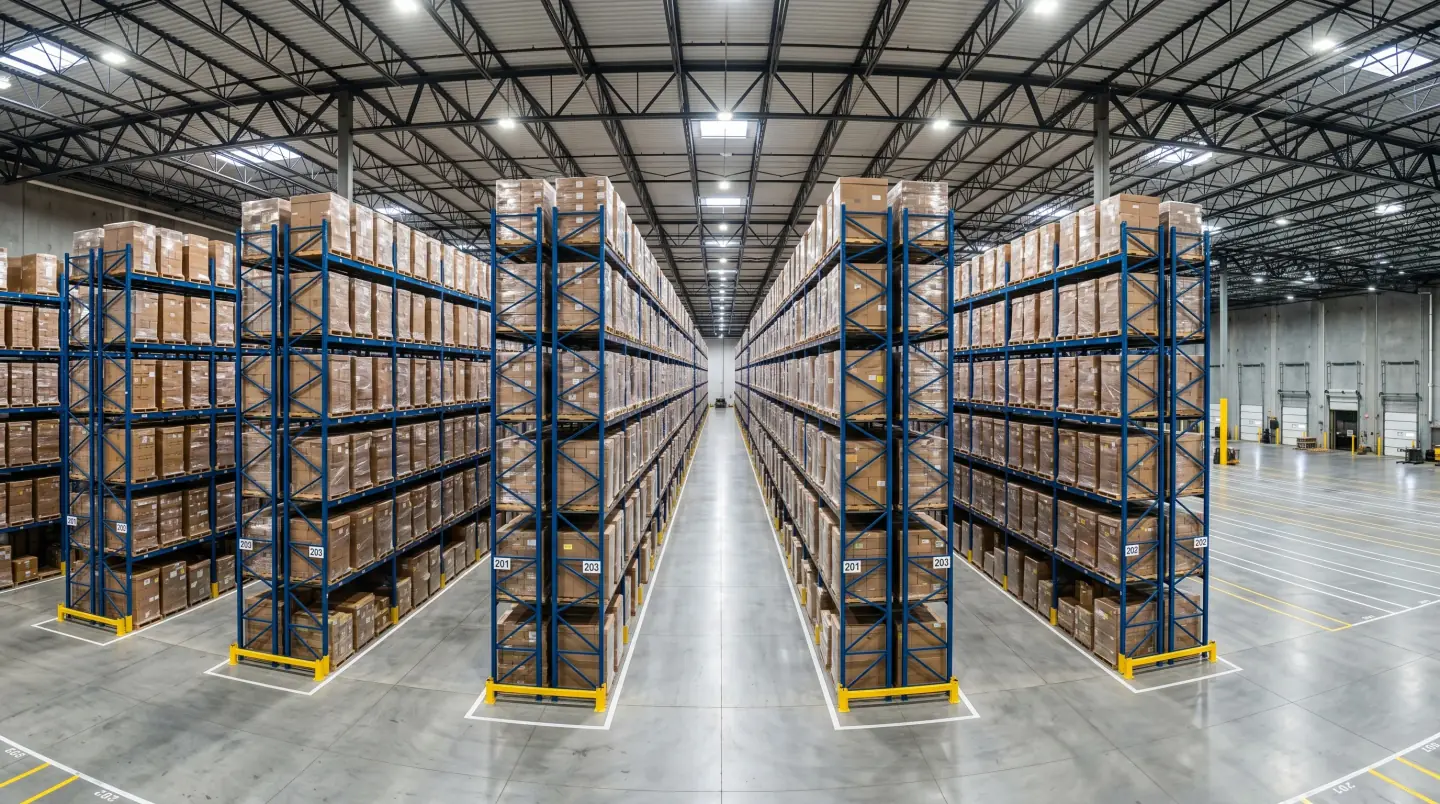
Pallet Racking & Shelving
Details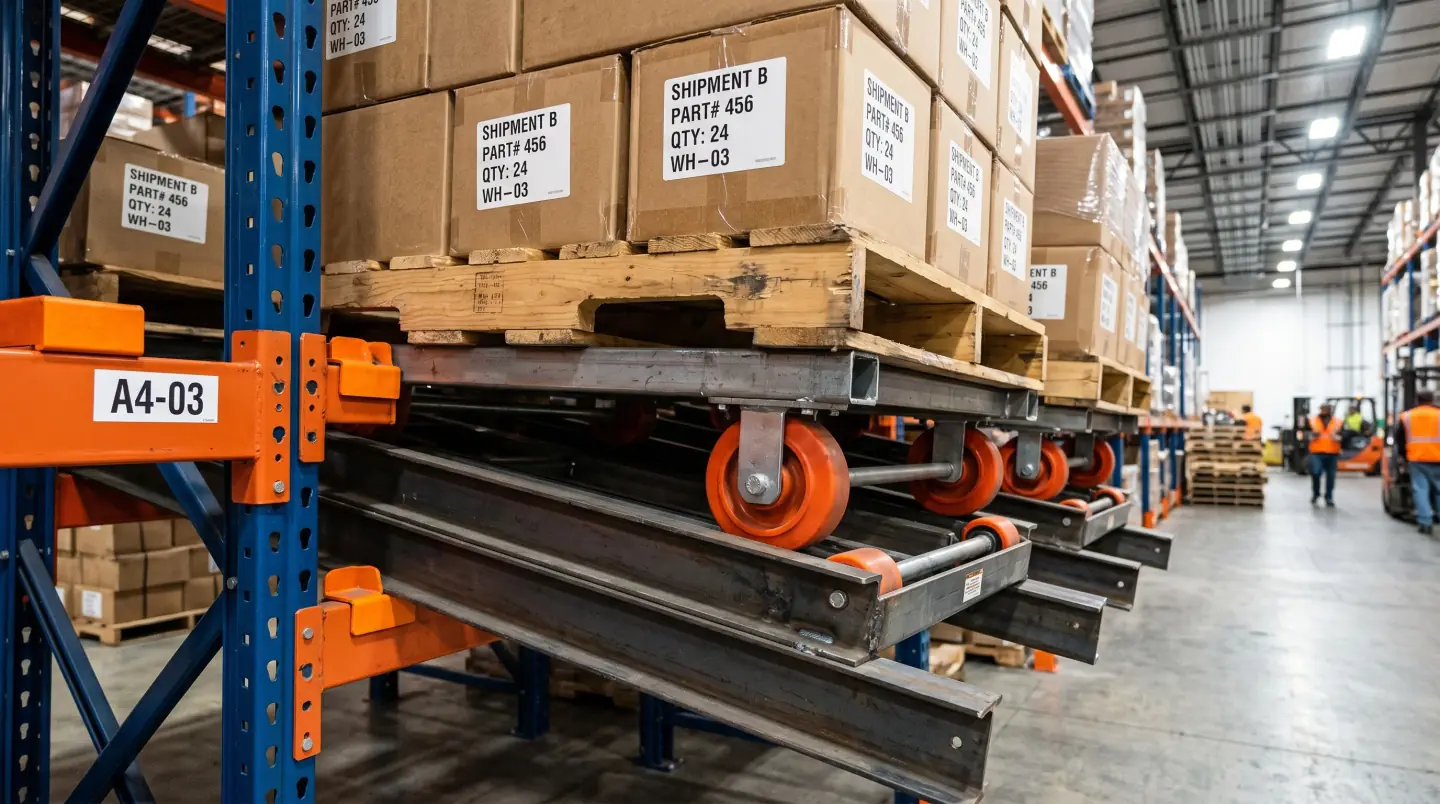
Pushback Rack
Details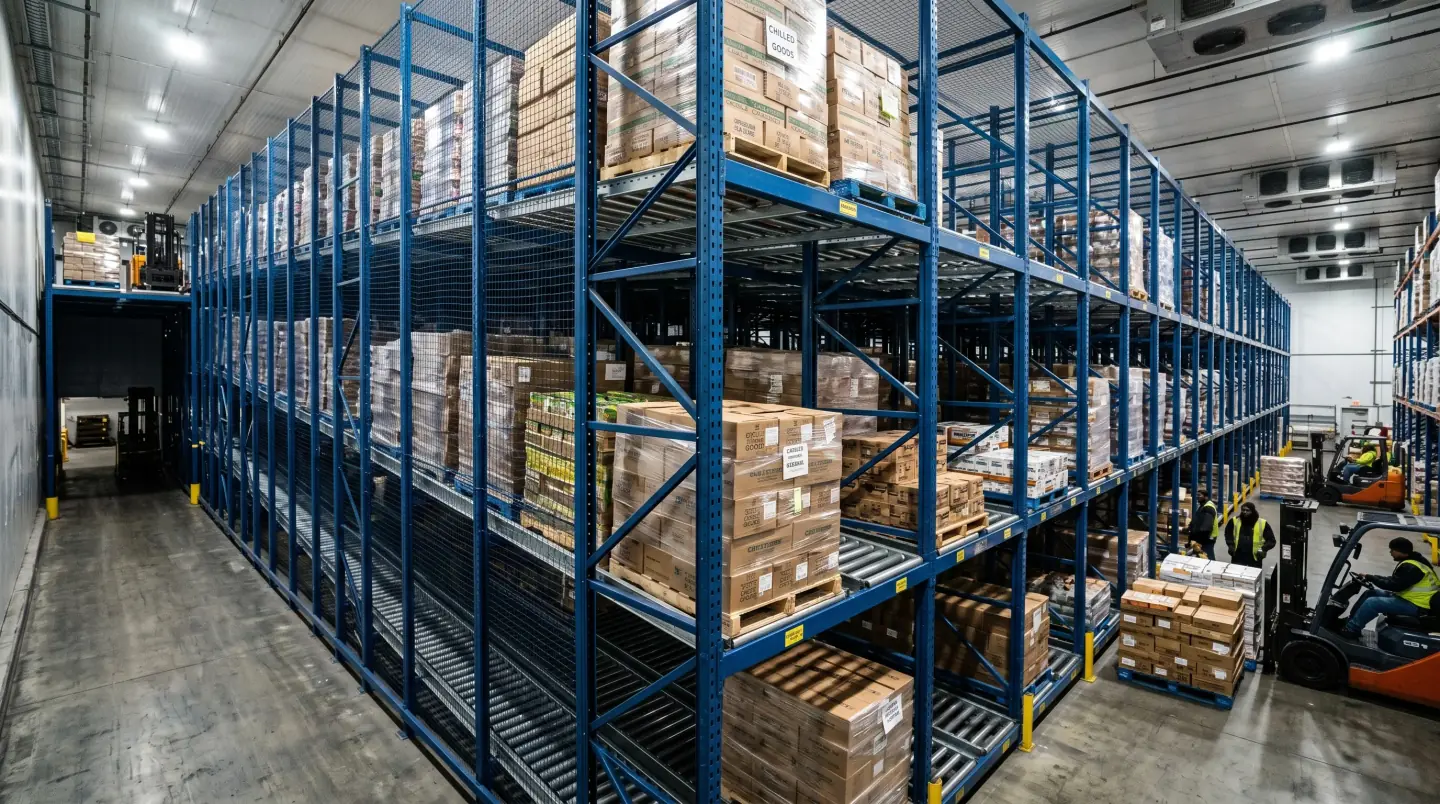
Pallet Flow Rack
Details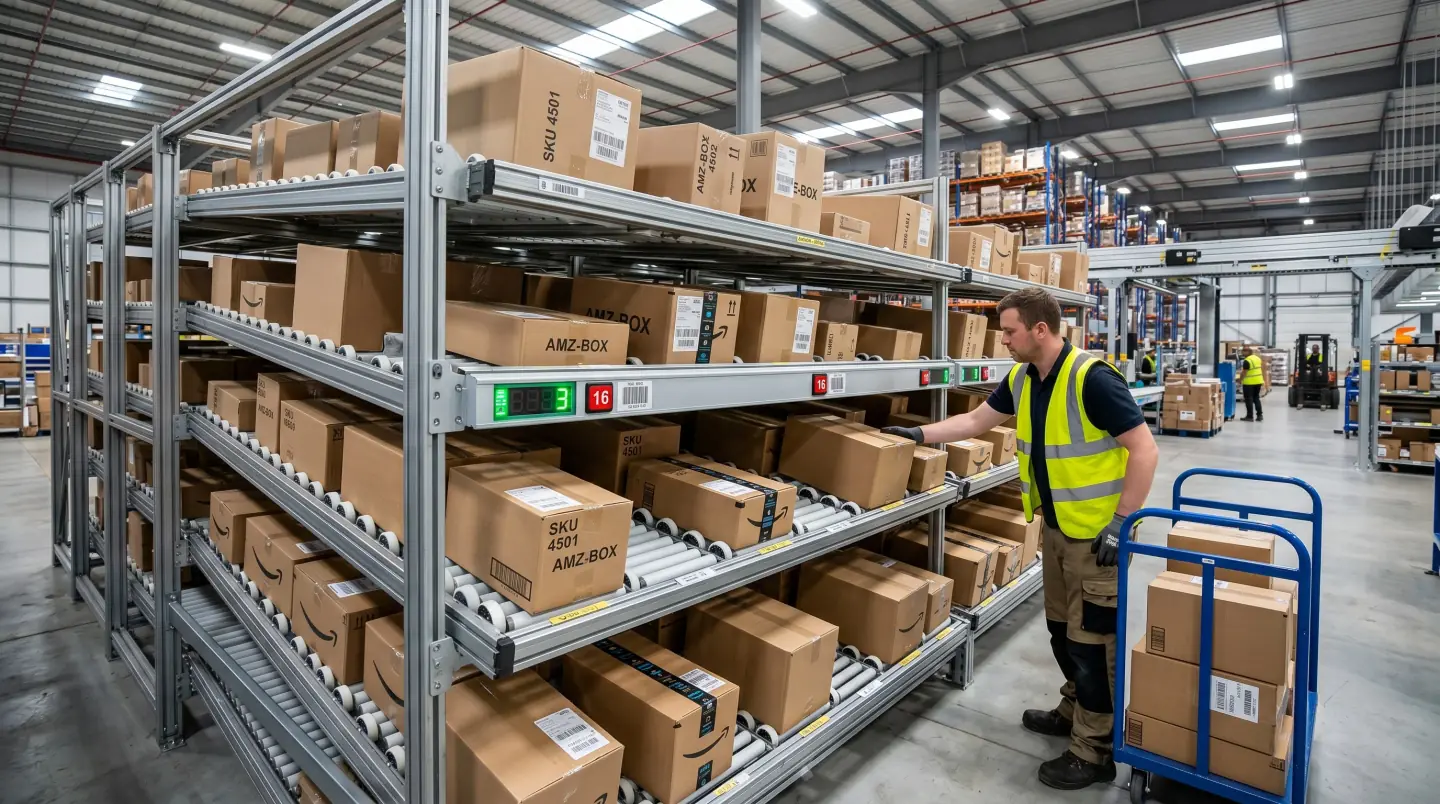
Carton Flow Rack
DetailsOur fifteen towns
Cantilever Rack around H-Town
We handle cantilever rack in fifteen towns around Houston, spread across Fort Bend, Brazoria, Montgomery, Galveston, Chambers and Harris counties. Each town page covers who reviews permits there, the usual building heights and the kinds of businesses we rack.
- Sugar Land, TX Cantilever Rack
- Missouri City, TX Cantilever Rack
- Richmond, TX Cantilever Rack
- Fulshear, TX Cantilever Rack
- Alvin, TX Cantilever Rack
- Freeport, TX Cantilever Rack
- The Woodlands, TX Cantilever Rack
- Magnolia, TX Cantilever Rack
- Channelview, TX Cantilever Rack
- Mont Belvieu, TX Cantilever Rack
- League City, TX Cantilever Rack
- Friendswood, TX Cantilever Rack
- Webster, TX Cantilever Rack
- Texas City, TX Cantilever Rack
- Galveston, TX Cantilever Rack