
Rack System · Houston Area
Drive-In Pallet Rack for H-Town Warehouses
The densest conventional pallet storage: trucks drive into the bays and set loads on rails running the full depth, 2 to 10+ positions deep.
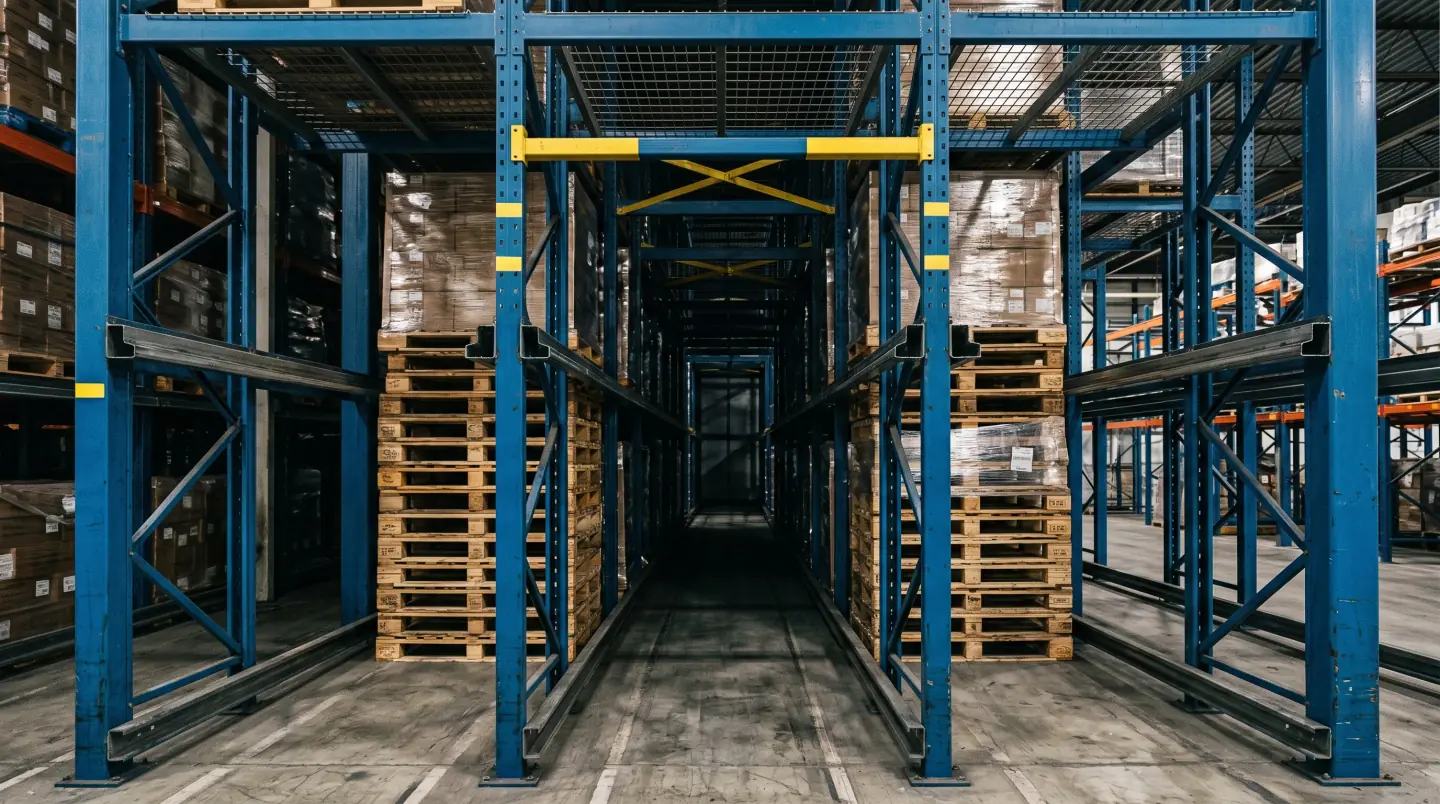
Drive-In Pallet Rack delivered and put up from Fort Bend County to Galveston Bay. Asking for a price costs nothing.
The basics
How Drive-In Pallet Rack earns its floor space
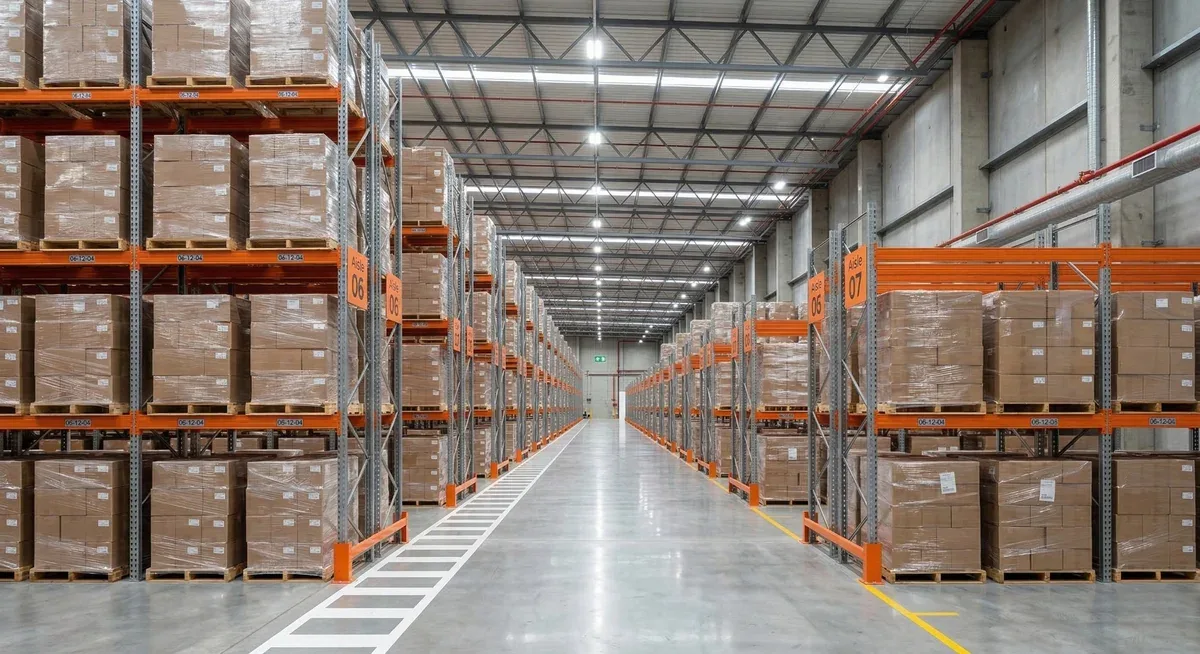
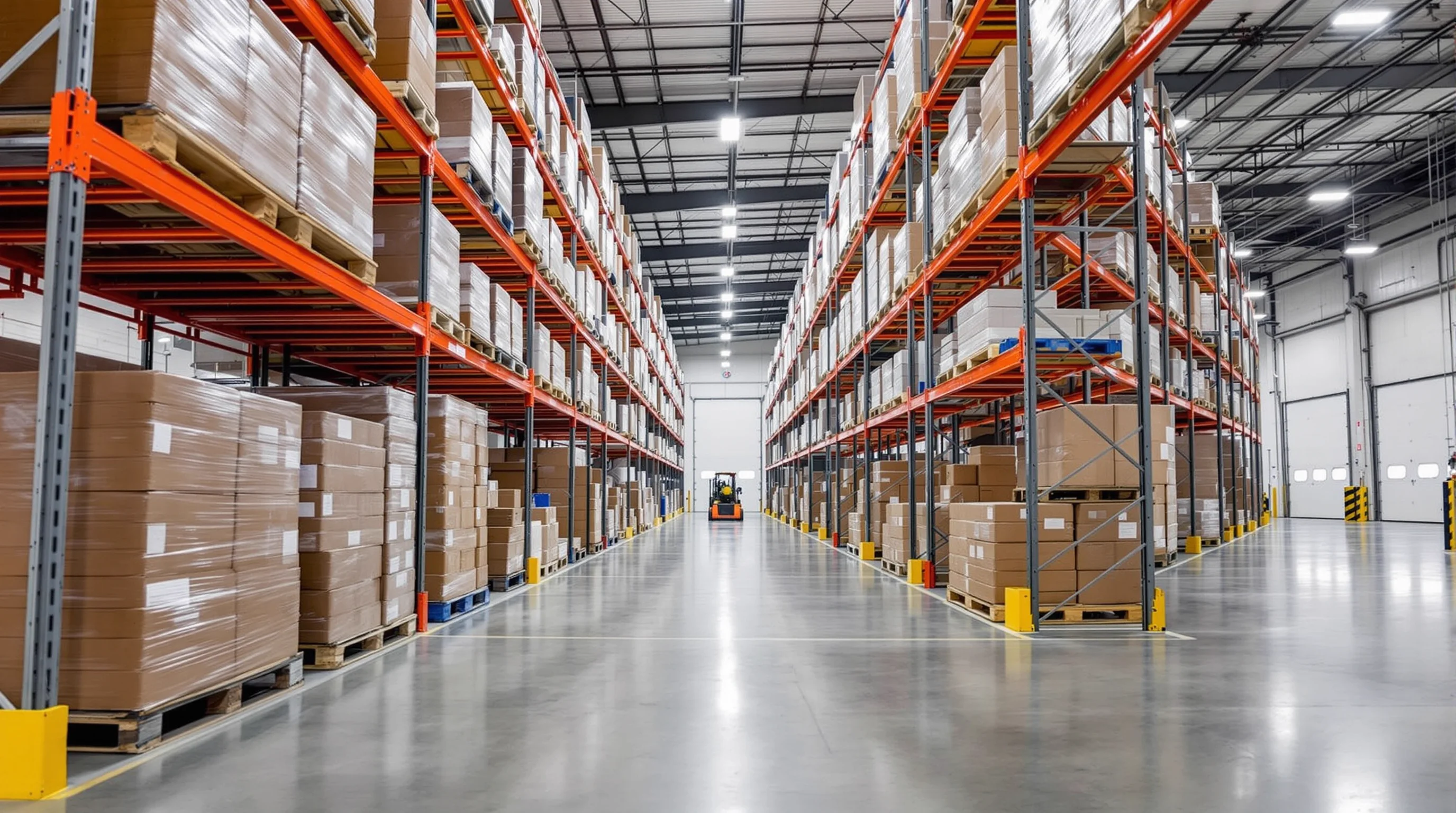
Short of an automated system, nothing packs pallets tighter than drive-in rack. The lift truck pulls straight into a bay between column lines and sets each load on continuous rails that run the depth of the lane. Bays commonly hold 2 to 10 or more loads deep and three to five high, turning nearly the whole rack footprint into storage. The costs are real, though. Rotation is newest-first only, trucks inside the structure make upright damage more likely than with any other rack, and each bay generally holds one SKU. For Houston-area freezers, bulk commodity storage and seasonal staging with few SKUs, drive-in still delivers the lowest price per pallet opening of any serious rack system. H-Town Pallet Racking designs drive-in for the ASCE 7 wind load at your address, anchors it to the adopted local building code and RMI ANSI MH16.1-2023, and specifies column guards on every job to keep repairs in check.
- The lowest price per pallet opening among the major rack types
- Nearly the whole footprint becomes storage, which matters most in cold rooms
- Few moving parts and little routine upkeep
- Handles seasonal peaks and bulk lots with room to spare
Built in
Features that matter
- Lanes 2 to 10 or more loads deep, usually three to five high
- Structural columns that take every load
- Full-depth rails with no beams to bend
- Column guards on every Houston-area job
- Drive-through layouts where limited oldest-first rotation is needed
- Designed for reach, narrow-aisle or sit-down trucks
- Designed to the adopted local building code and RMI ANSI MH16.1-2023
By the numbers
Drive-In Pallet Rack: specs
Typical specs
Heavy columns carry it all
Columns stand on a wider grid than selective rack and take every load directly. There are no front-to-back beams; the uprights handle both vertical and lateral forces.
Rails in place of beams
Horizontal rails run the full depth of each lane along the inside of the columns. Pallets sit on those rails at each level.
The truck drives in
Operators drive between column lines to set or pull a load. Lanes fill from the back toward the aisle and empty from the aisle backward.
Good fit or not
Does it suit your building?
It makes sense when
- Density matters most and newest-first rotation is fine
- Each bay can hold a single SKU, or very few, at a time
- You run a freezer or cooler where every cubic foot costs energy
- Seasonal or surge stock needs capacity more than selectivity
- Your fleet already includes reach or narrow-aisle trucks, or you plan to add them
Look elsewhere when
- Product must ship oldest-first; choose pallet flow
- Bays would hold many different SKUs; selective fits better
- You cannot live with periodic rack repairs; look at pushback
- Your fleet is all counterbalance and will stay that way
Where it shows up
Who uses it around H-Town
Freezer storage: Galveston, Texas City, League City
Frozen seafood and food storage around the bay keeps bulk single-SKU lots in drive-in so less floor space has to be refrigerated. Tighter storage can mean noticeably lower power bills over time.
Packaged resin and polymer: Mont Belvieu, Channelview
Polymer from the east-side plants often ships in large single-grade lots that suit drive-in. Stored plastics are treated as a high-hazard commodity under the fire code, so fire protection has to be designed alongside the rack.
Port cargo staging: Freeport, Texas City
Warehouses handling cargo through Port Freeport and the Port of Texas City stage bulk lots by shipment. Drive-in fits where lots leave together and rotation is set by the vessel schedule.
Seasonal retail reserve: Sugar Land, Richmond
Retail distribution in Fort Bend holds holiday and seasonal SKUs for a set window before they ship to stores. When capacity outranks selectivity, drive-in carries the load.
Bulk beverage staging: Missouri City, Alvin
Drink distributors use drive-in in staging zones where loads leave by route or truck rather than by code date, squeezing the most out of the footprint.
Asked and answered
Questions about Drive-In Pallet Rack
1 What separates drive-in from drive-through rack?
Drive-in has one open end, so trucks enter and leave the same way and loads rotate newest-first. Drive-through is open at both ends, so loads go in one side and come out the other for limited oldest-first rotation. Drive-through takes more aisle space and more steel, and it only makes sense when that rotation is worth paying for.
2 Which lift trucks work in drive-in rack?
Reach trucks and narrow-aisle trucks are the usual choice because they have to maneuver between columns inside the bay. Sit-down counterbalance trucks can work if the lanes are built wider, at some cost in density. If your fleet is all counterbalance and you want density without changing it, pushback is usually the better answer.
3 Why is drive-in more prone to damage?
Every trip in and out passes close to columns and rails. One clipped upright can compromise a section and put loads at risk. That is why we specify column guards on every drive-in job and why owners should plan for periodic inspection and repair.
4 Drive-in or pushback: how do they compare?
Both rotate newest-first and both beat selective on density. Drive-in lanes go deeper, 2 to 10 or more versus 2 to 6, and cost less per opening, but trucks enter the rack and you usually need reach or narrow-aisle equipment. Pushback keeps trucks outside, runs with counterbalance trucks and tops out around six deep. It is a trade between density and cost on one side and damage control and fleet flexibility on the other.
5 What inventory profile suits drive-in?
Drive-in pays off when a bay holds one SKU, or very few, for weeks at a time. Twenty pallets of a single item sitting for a month before shipping is an ideal case. If every bay needs several SKUs and stock turns daily, selective or pushback will serve you better.
6 Does drive-in work in a freezer?
Yes, and freezers are among the most common drive-in users around Galveston Bay and across the metro. Packing loads tighter shrinks the space that has to be kept cold, and since refrigeration cost tracks volume, that saving often tips the decision toward drive-in even when pushback would also work.
7 Is drive-in the cheapest dense rack?
Usually. Materials per opening sit close to selective, although installation takes more work because of the rails and heavy columns trucks drive between. For bulk freight with few SKUs, it is typically the least expensive route to high density. We check your pallet sizes and truck dimensions before quoting.
Compare
The other systems
Pallet Racking & Shelving
Details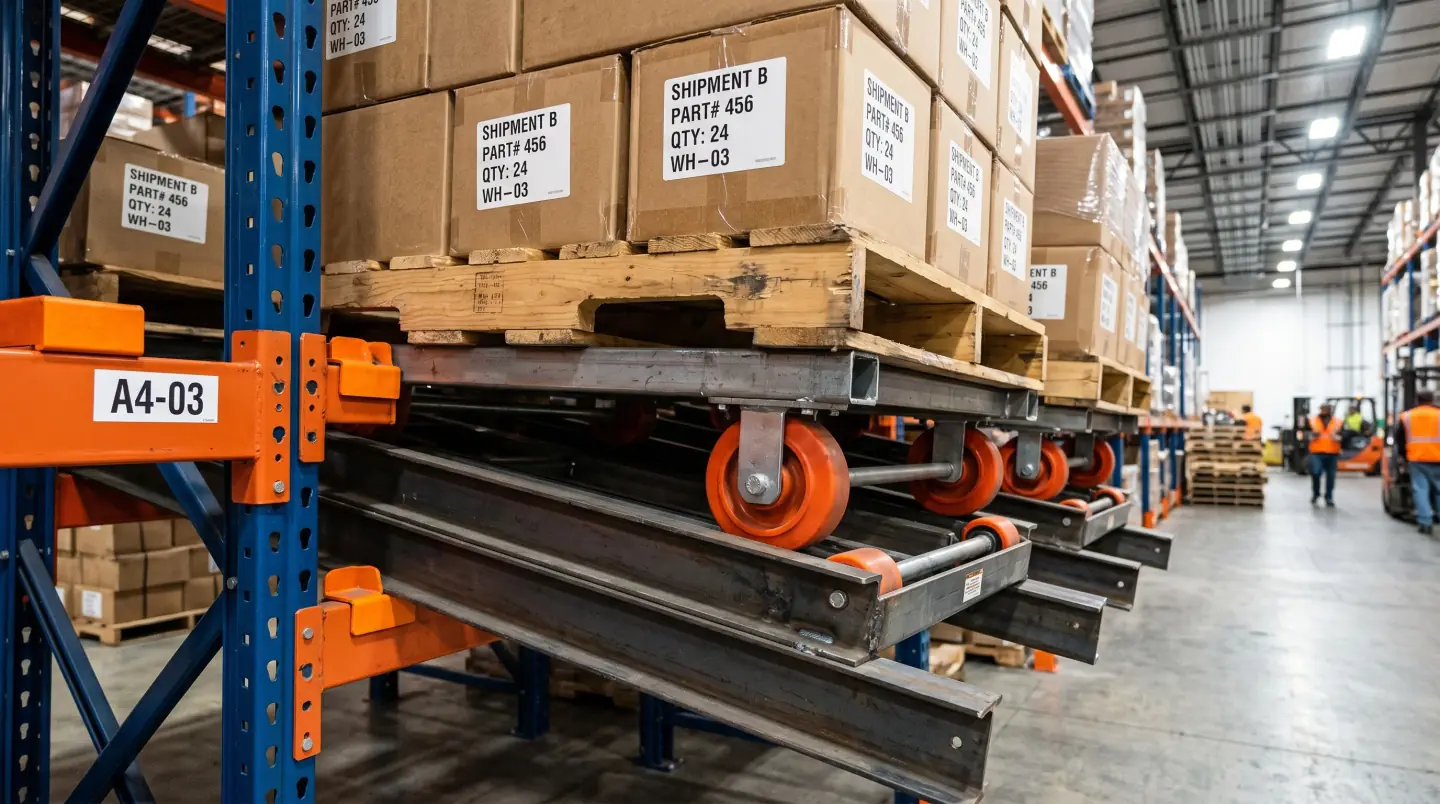
Pushback Rack
Details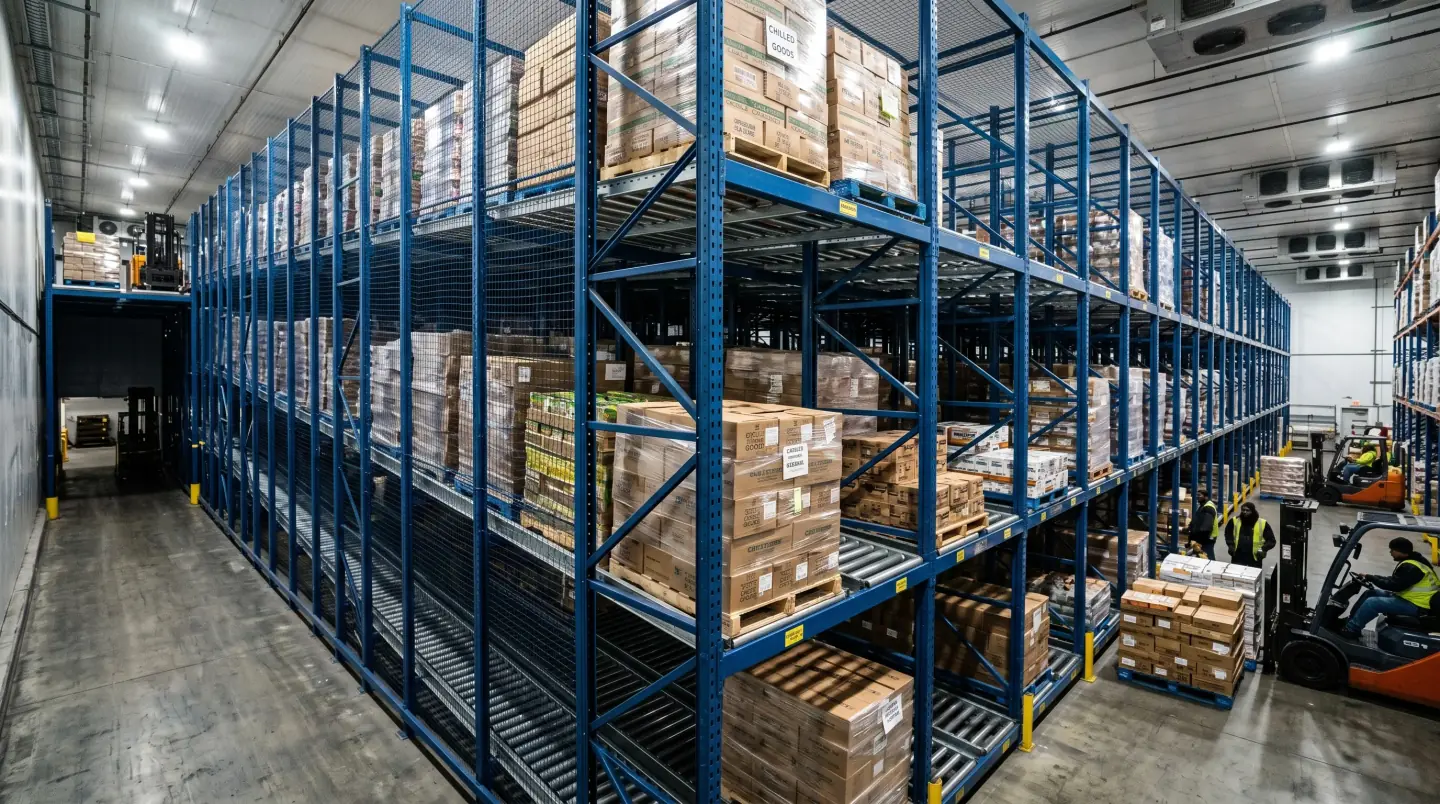
Pallet Flow Rack
Details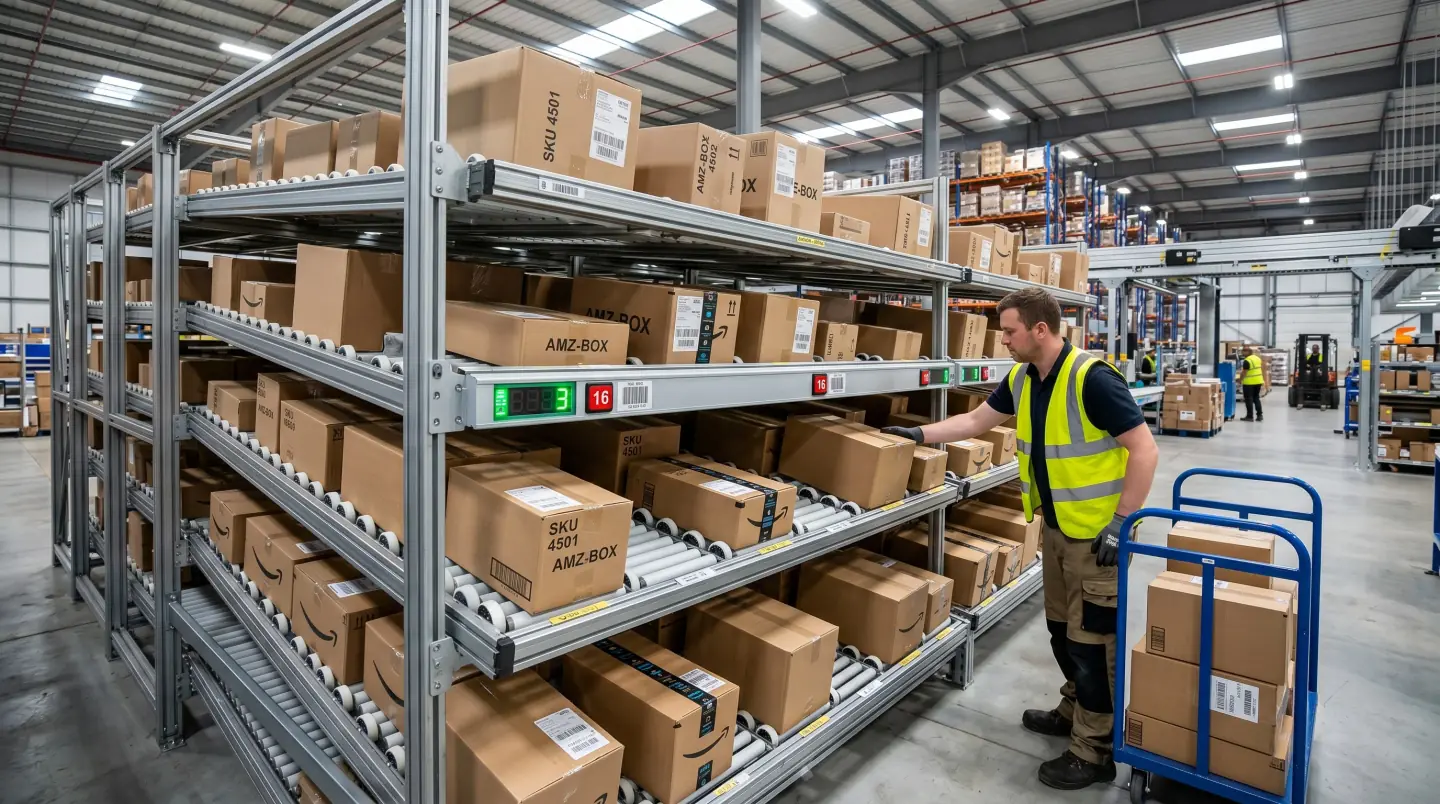
Carton Flow Rack
DetailsOur fifteen towns
Drive-In Pallet Rack around H-Town
We handle drive-in pallet rack in fifteen towns around Houston, spread across Fort Bend, Brazoria, Montgomery, Galveston, Chambers and Harris counties. Each town page covers who reviews permits there, the usual building heights and the kinds of businesses we rack.
- Sugar Land, TX Drive-In Pallet Rack
- Missouri City, TX Drive-In Pallet Rack
- Richmond, TX Drive-In Pallet Rack
- Fulshear, TX Drive-In Pallet Rack
- Alvin, TX Drive-In Pallet Rack
- Freeport, TX Drive-In Pallet Rack
- The Woodlands, TX Drive-In Pallet Rack
- Magnolia, TX Drive-In Pallet Rack
- Channelview, TX Drive-In Pallet Rack
- Mont Belvieu, TX Drive-In Pallet Rack
- League City, TX Drive-In Pallet Rack
- Friendswood, TX Drive-In Pallet Rack
- Webster, TX Drive-In Pallet Rack
- Texas City, TX Drive-In Pallet Rack
- Galveston, TX Drive-In Pallet Rack