H-Town Pallet Racking Service
Inspection & Repair Around Houston
H-Town Pallet Racking inspects and repairs warehouse racking in our fifteen Houston-metro towns.
Rack Inspection & Repair from Fulshear to Galveston and Magnolia to Mont Belvieu. Quotes cost nothing.
The short version
Rack Inspection & Repair, the H-Town way
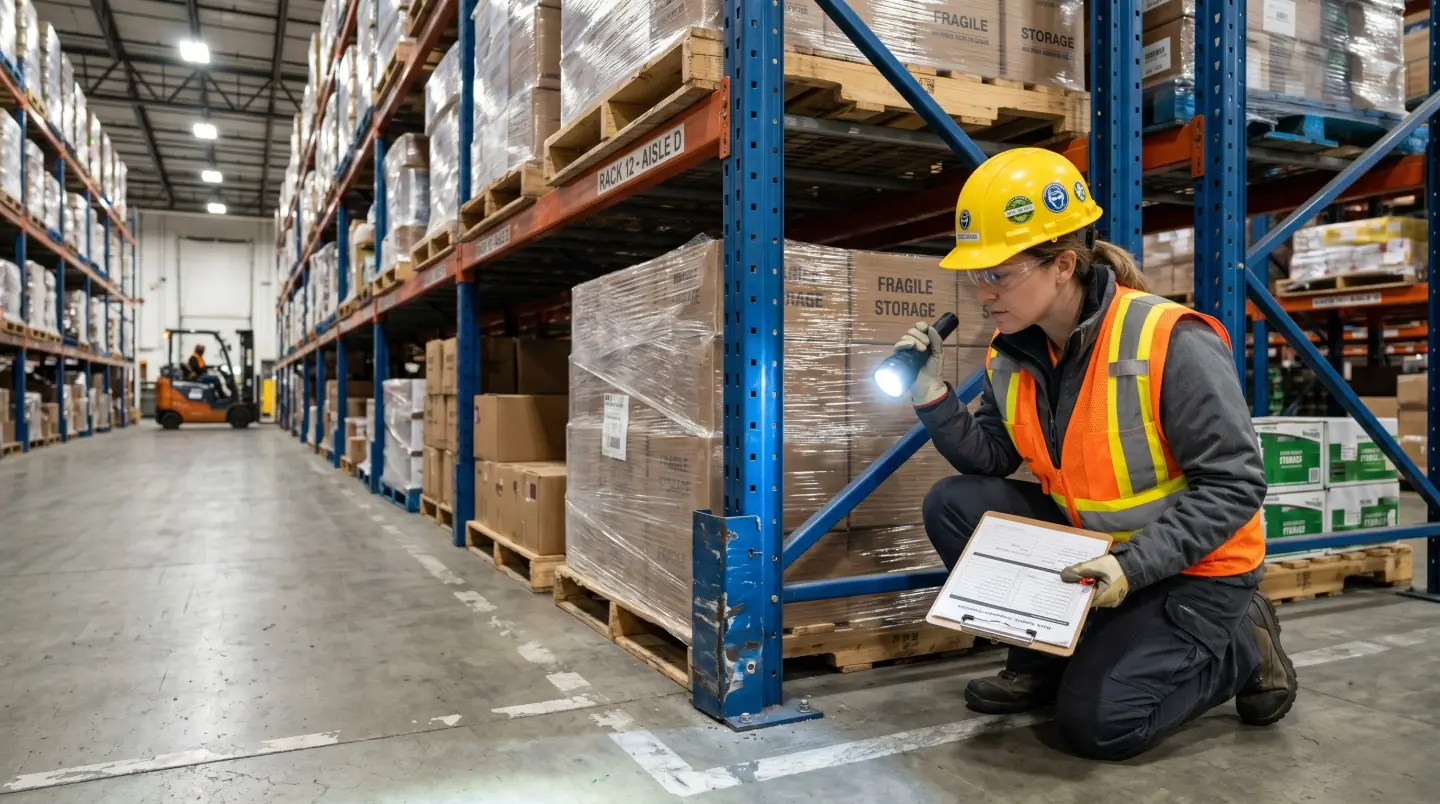
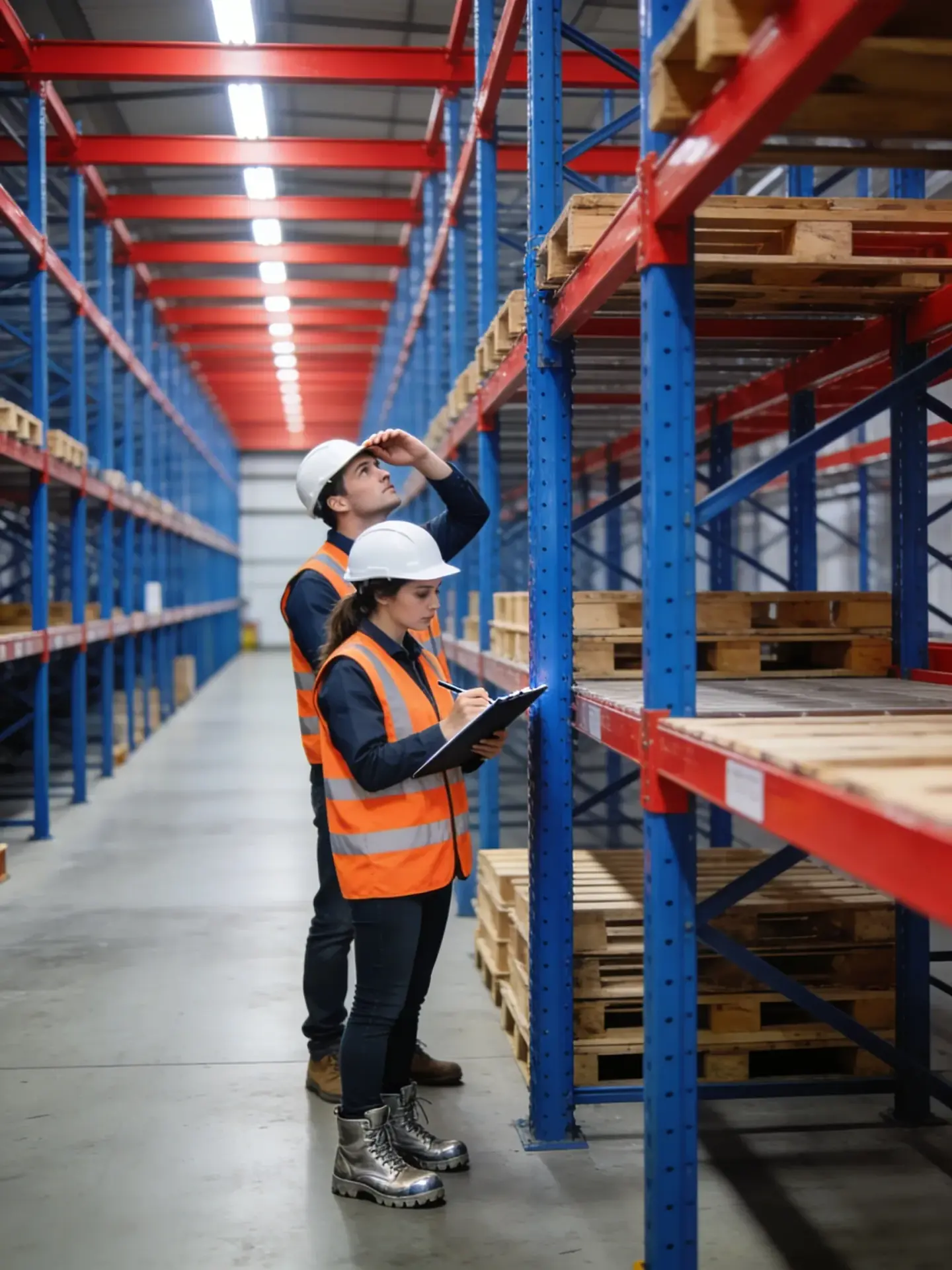
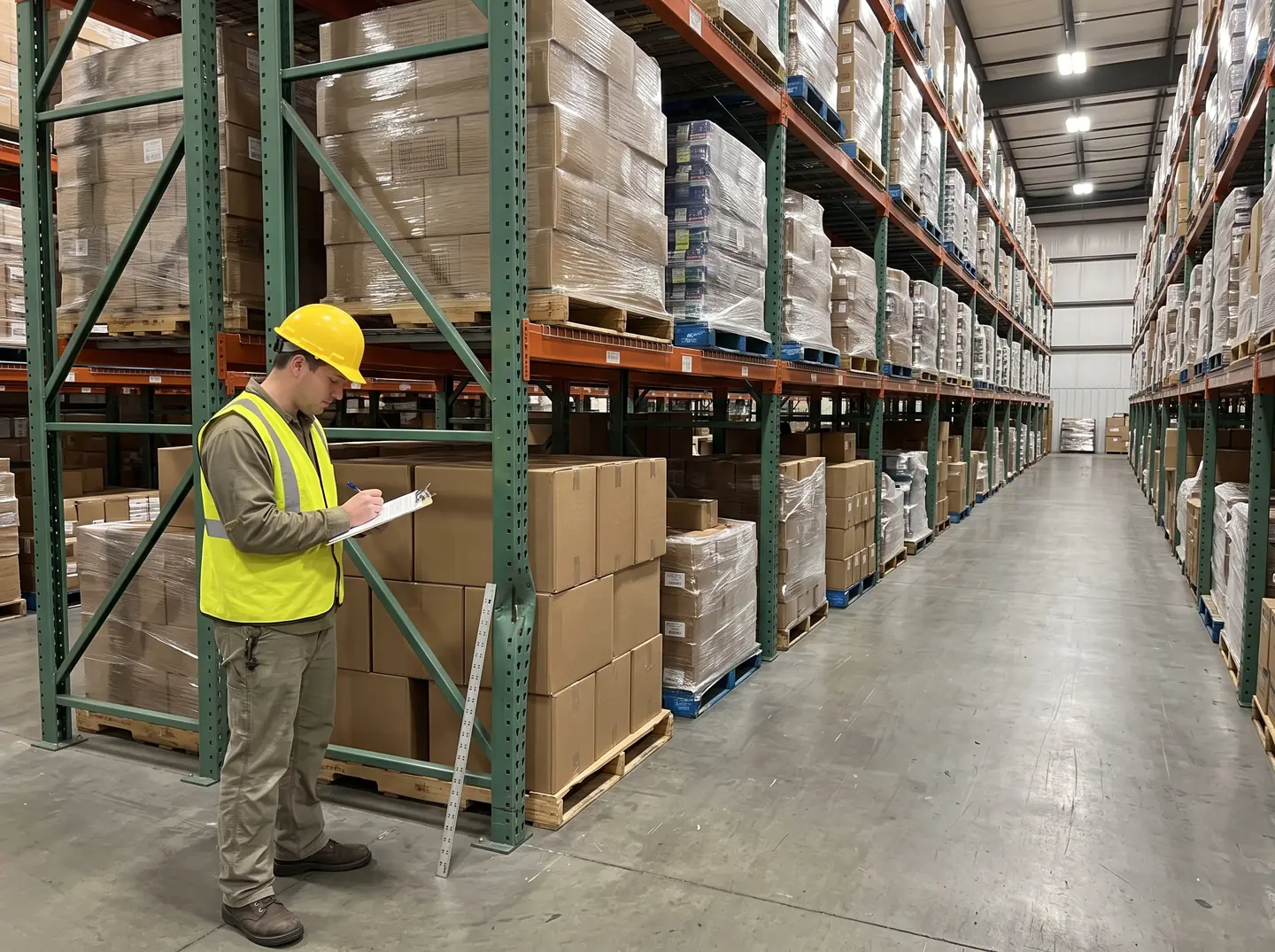
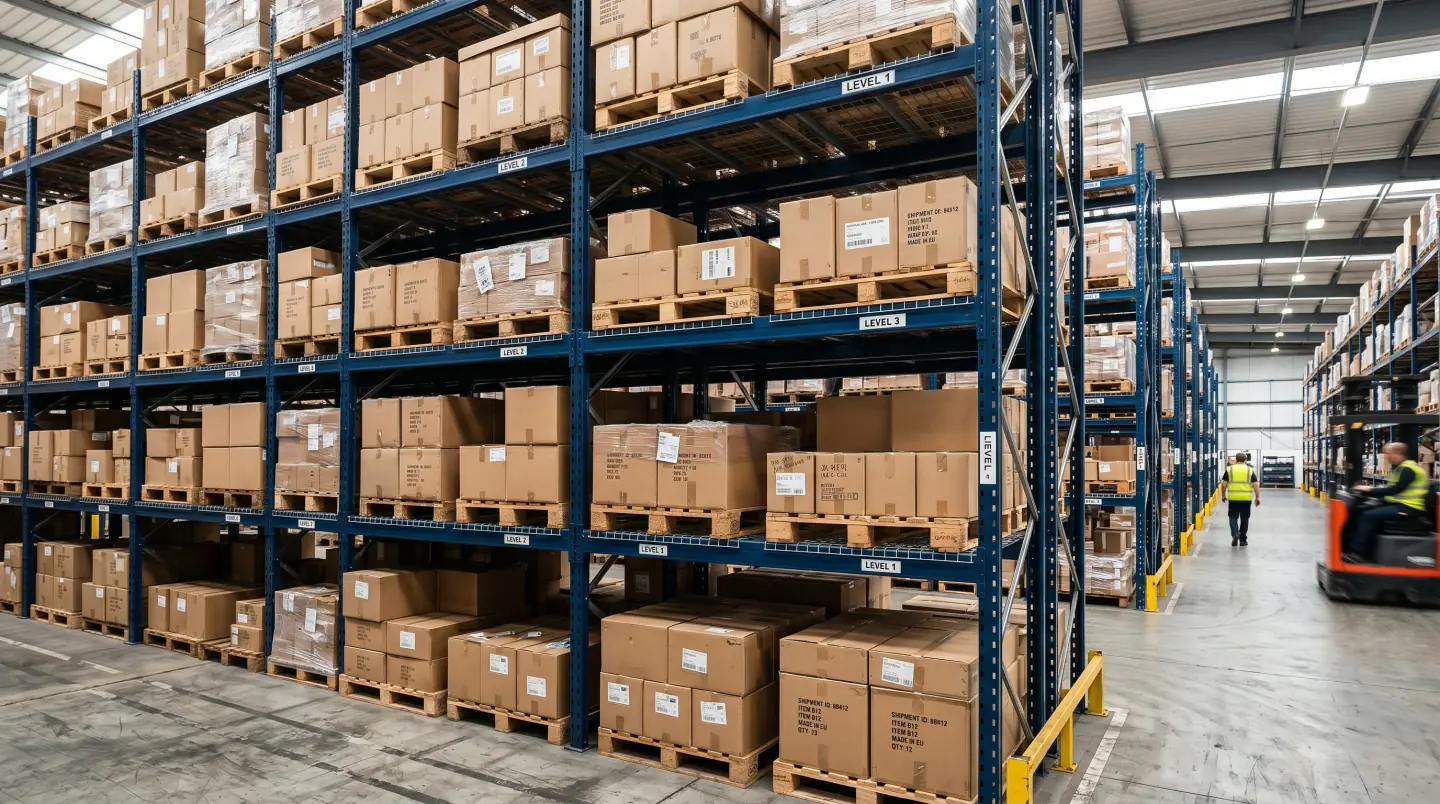
H-Town Pallet Racking inspects and repairs warehouse racking in our fifteen Houston-metro towns. Each inspection follows ANSI/RMI MH16.1 and looks at uprights, beams, connectors, bracing, base plates and anchors, with every finding photographed, located and graded. Our area adds two local failure modes to the usual forklift damage. Along Galveston Bay and the Gulf, salt air attacks the base-plate and anchor zone, so coastal sites get a closer corrosion check. Inland, the expansive Beaumont Formation clay heaves and shrinks, which pushes whole rows out of plumb without anyone hitting them, so we survey plumb along the row instead of judging uprights one at a time. When repairs are needed, the same team quotes and completes them.
- Protect your people from a collapse nobody saw coming
- Keep a paper trail that satisfies insurers and fire inspectors
- Fix small damage while it is still small and inexpensive
- Replace emergency spending with planned maintenance
In the scope
What is covered
- MH16.1-aligned inspection of every bay
- Corrosion check for coastal and bay-front sites
- Photographed findings graded green / yellow / red
- Prioritized repair quote
- Check of completed repairs and capacity sign-off
Step by step
How the job runs
Walk Every Aisle
The inspector checks each bay, photographs each deficiency and records where it is, so every finding can be found again by your team.
Report and Prioritize
You receive a graded report with recommended actions and a repair quote. We go through it with you so the priorities are clear.
Repair
Matching components are sourced and fitted, anchors replaced or re-set, and connectors restored, starting with the red items.
Watch for these
Signs Your Rack Is Due for an Inspection
- Bent uprights, torn bracing or sagging beams are visible from the aisle
- It has been more than a year since a documented inspection
- Rust is forming on base plates or anchor nuts, common near the bay and the Gulf
- Frames along a row lean the same way, a sign the slab has moved
- An insurer, fire inspector or corporate auditor has asked for records
- The building runs multiple shifts with heavy lift-truck traffic
- The rack was moved or rebuilt by a crew you cannot vouch for
Asked and answered
Questions about Inspection & Repair
1 Does OSHA say how often rack must be inspected?
OSHA does not print a fixed interval. The industry standard it relies on, ANSI/RMI MH16.1, calls for a documented inspection by a qualified person at least once a year, backed by routine visual checks from your own people. Busy buildings often move to a quarterly walk. Near the bay and the Gulf there is an extra reason to look more often: salt-laden air corrodes base plates and anchors faster than it does fifty miles inland.
2 What damage do you find most often in this area?
Lift-truck strikes low on the upright are the most common finding everywhere. Around here two others stand out. Coastal buildings in Texas City, Galveston and Freeport show rust at base plates and anchor nuts, where salt air and floor moisture collect. Inland buildings on expansive clay show frames out of plumb because the slab has moved beneath them — damage that follows the floor rather than the forklift.
3 Repair or replace a damaged upright?
Either can be correct. An upright whose damage falls inside the repair criteria can often be restored with an engineered repair kit rated for that frame. Severe bends, torn bracing, or damage above the first beam level usually mean replacement. We explain which applies to each finding and why, and we do not recommend a repair product that has no engineering behind it for your frame.
4 Will I get a written report?
Yes. You receive a report with photographs, a location reference for every finding, a green / yellow / red severity grade, and a recommended action for each item. It is written to be handed to an insurer, a fire inspector or a corporate safety auditor without further explanation.
5 What does an inspection cost?
It depends on how many bays there are, how tall they are and whether the building can be walked during operations. We quote each inspection after a short conversation about the site, and repair pricing comes from the same team that found the damage, so nothing is lost in the handover.
6 What happens if you find a red-tagged bay?
A red finding means the bay should be unloaded and kept empty until it is repaired — and you can start unloading before we leave the building. We then schedule the repair ahead of routine work. Yellow items go on a planned repair list, and green items are logged for the next inspection.
Also on the list
More we can do
Installation
Details
Engineering & Permitting
Details
Design & Space Planning
Details Used Rack Buyback
DetailsOur fifteen towns
Inspection & Repair around H-Town
We handle inspection & repair in fifteen towns around Houston, spread across Fort Bend, Brazoria, Montgomery, Galveston, Chambers and Harris counties. Each town page covers who reviews permits there, the usual building heights and the kinds of businesses we rack.
- Sugar Land, TX Inspection & Repair
- Missouri City, TX Inspection & Repair
- Richmond, TX Inspection & Repair
- Fulshear, TX Inspection & Repair
- Alvin, TX Inspection & Repair
- Freeport, TX Inspection & Repair
- The Woodlands, TX Inspection & Repair
- Magnolia, TX Inspection & Repair
- Channelview, TX Inspection & Repair
- Mont Belvieu, TX Inspection & Repair
- League City, TX Inspection & Repair
- Friendswood, TX Inspection & Repair
- Webster, TX Inspection & Repair
- Texas City, TX Inspection & Repair
- Galveston, TX Inspection & Repair